A discussion on E-learning offered in Malaysian universities: Pros and Cons from the students perpective


What is E-learning:

E-learning involves the use of a computer or electronic device in some way to transfer of skills and knowledge such as deliver training, educational or learning resources through Internet or an Intranet. In nowadays, E-leaning has implemented in most universities to convenience their student to get information. Students have free access to these materials as when needed anytime and anywhere by just using the internet.

Pros:

Save the cost of travelling such as petrol cost and public transport cost. Students can easily get their learning resources from internet by just login into website without physically present in a university. This system not only help student reduce a lot of cost travelling but is also help to save a time of traveling such as avoid traffic jam because student can easily get their leaning resources with the use of internet by just staying at their own house.

Students can have wider leaning option which is not restricted to the geographic location. For example, student who studies in Malaysia can access to the resources upload by other foreign university such as get teaching materials through e-libraries. These help students easier to get additional information from foreign knowledge to make their process of studies easier .Thus, more information or opinion can be exchanges between local knowledge and foreign knowledge.

Cons:

Since text format is only the tool of communication has implemented in e-learning, the conflict between student and lecture will arise due to lack of face-to-face communication. Without physically face to face communication, they may lose the directions and get confused on the course of activities.The social skill of student will not be trained and it bring problem to students when they go for work.


Students will become lazy and ineffective, due to being spoon fed by the educational institutions. With e-learning, most educational task is done either by the tutor or some sophisticated software, leaving students with the simple task of just downloading notes and reading them. Although this may make the learning process easier and more effective, it also runs the risk of creating dependent and lazy students. Degressive students will hard to compete with the aggresive students that take action by themselves and independent to do the task without helping.


Reference Link:

Corporate Blogging: A new marketing communication tool for companies

A corporate blogging is published and used by an organization to reach its organizational goals. The advantage of blogs is that posts and comments are easy to reach and follow due to centralized hosting and generally structured conversation threads. Currently, all major browsers (including Firefox, Opera, Safari and Internet Explorer) support RSS technology, which enables readers to easily read recent posts without actually visiting the blog, which is very useful for low-volume blogs.

According to research of NewPR Wiki, there was 61 (12.2%) of the Fortune 500 are blogging as of 04/17/09. One of the successful blogs is Amazon Web Services Blog by Amazon.com that about Amazon web services, products, tools and developer information. It helps to improve the communication and its customer services, attract more people to consume and discuss new products online.

Corporate blogging provides a clear mind map or editorial guidelines of overall marketing or communication strategy to its employees and third parties with organization communication plan and media mix. Besides that, it encourages employee participation in contribution of expertise, free discussion of issues or topics and deal with it, collective intelligence, be a direct communication between various layers of an organization and shares their views with others employees, teams or spokespersons publicly.

Furthermore, it can be used to announce new products and services, explain and clarify policies of the company and to react on public criticism on certain issues. Business blog can interact with a target market on a personal level by building a level of credibility and asking for their feedback on products and services.


Pros and Cons Of Corporate Blogs

The pros of corporate blogging is posts and comments are easy to reach and follow by employees due to centralized hosting and generally structured conversation threads. Besides that, it can be more accessible among the executives since the corporate blogging are an “unparalleled information gathering mechanism”.

Furthermore, a search able archive of thoughts and ideas can be created and jotting down within an hour through corporate blogging that cost more cheaper than other ways. Lastly, executives can receive the important information from employees and customers’ questions and feedback that will be permanently recorded on the blog and increases the efficiency while decreases the time wasted on needless e-mails.

However, corporate blogging might make it easy for defamation and invasion of privacy or to breach information security and loss of company confidentiality. (Wired News, 2005) Hence, this fear has stopped 22 percent of employees from writing a corporate blog. Besides that, it will create an expectation of updating the blog regularly and the time that taken in writing a blog will cause loss of $ 759 billion in productivity every year. Additionally, a new style of communication will be mastered since corporate blogging become popular in these recent years.

In conclusion, corporate blogging is getting important for corporation to deliver the message privately or publicly since it has brought many pros even thought the cons come along with it.

For the additional information, please refer those links:

1. The 5 types of Corporate Blogs

I was glad to read a recent post on Canada.com’s Gazette, which highlighted the 7 highly effective corporate blogging styles that exist today. So, rather than reinvent the wheel why not start with that post...

2. Do's and don'ts of corporate blogging

Know your audience, update your blog regularly, and cover your... rear. And don't expect a blog to turn around a failing company...

3.Fortune 500 Business Blogging Wiki

Welcome to this directory of Fortune 500 companies that have business blogs, defined as: active public blogs by company employees about the company and/or its products...
There are many ways to market your company on the web. Now we have another important alternative: the Corporate Blog. By David Meerman Scott...

5. Top corporate blogs and the reasons you should reading them

Lots of companies post uninteresting blogs - but not this crowd! Each of these companies has found a way to be a category killer and stand out.

Things to take note to prevent e-auction fraud when a consumer participating go an e-auction.


What is E-auction:
Auction is market mechanism by which buyers make bids and sellers place offers. It is characterized by the competitive and dynamic nature by which the final price is reached. Auctions can rapidly disposal of items that needs liquidation or a quick sale, they offer trading opportunities for both buyers and sellers that are not available in conventional channels and they ensure cautious execution of contracts.

The most popular type of auctions is an electronic auction (e-auctions) which means auctions conducted online. Nowadays many people joining in e-auction but they always do not know how to prevent e-auction fraud.

7 Ways to prevent E-auction fraud:

1. User identity verification such in IC number, driver’s license number or date of birth. For example, verified eBay user, the voluntary program, encourages users to supply eBay with information for online verification.

2. Authentication service. It is to determine whether an item is genuine and described appropriately. It difficult to perform because their training and experience, experts can detect counterfeits based on subtle detail.

3. Grading services which is a way to determine the physical condition of an item, such as ‘poor quality’ or ‘mint condition’. Different item have different grading systems. For example, trading cards are graded from A1 to F1, while coins are graded from poor to perfect uncirculated.

4. Feedback forum. It allows buyers and sellers to build up their online trading reputations. It provides user with ability to comment on their experiences with other.

5. Non-payment punishment. To protect sellers, a friendly warning for first-time nonpayment. A sterner warning is for second-time offense, with a 30 day suspension for a third offense and an indefinite suspension for a fourth offense.

6. Item verification which is a way of confirm he identity and evaluate the condition of an item. Third parties will evaluate and identify an item through a variety of means. For example, some collectors have their item “DNA tagged” for identification purpose. It provides a way of tracking an item if it charges ownership in future.

7. Physical inspection. It can eliminate many problems especially for collectors’ item.

Reference link:
http://www.wikipedia.org/

E-Government in Malaysia: Its implementation so far and citizen's adoption strategies.


E-Government is the short-term for electronic government. It is also known as e-gov, digital government, online government or transformational government. Malaysia’s huge e-government began in 1997 with the launch of Multimedia Super Corridor E-Government Flagship Application.

E-Government initiative was launched to lead the country into the Information Age. It will improve the way government operates internally, as well as how it delivers services to the people of Malaysia. It also seeks to improve the convenience, accessibility and qualities of interactions with citizens and businesses. In the meantime, it also improves information flows and processes within government to improve the speed and quality of policy development, coordination and enforcement.

Multimedia Super Corridor (MSC) Malaysia Vision


According to the survey which done by Brown University on Rhode Island, United State, on international e-government ranking list, Malaysia is in the ranking of 25. Malaysia government has successfully implemented the e-government. One of the most successful applications is e-filling.

E-filling is a method of filing of all income documents of tax payer in Malaysia, which uses an electronic format rather than a traditional paper format, from office or home through Internet. To use these services, taxpayers need to make a tax registration. Malaysia's Inland Revenue Board (IRB) will send the PIN for online tax registration through mail to the taxpayers.

The vision of Electronic Government is a vision for government, businesses and citizenry working together for the benefit of Malaysia and all of its citizens. The vision focuses on effectively and efficiently delivering services from the government to the people of Malaysia, enabling the government to become more responsive to the needs of its citizens.

The 7 pilot projects of the Electronic Government Flagship Application are as follows:

1. Project Monitoring System (SPP II) – is an online system that monitors the entire lifecycle of national programs. It also support and monitor entire lifecycle of Malaysia’s five year development program, to have a quality projects, provide a platform for exchanging ideas and demonstrate best practices models in project implementation.

2. Human Resource Management Information System (HRMIS) – is an integrated, technology-enabled Human Resource Management Information System for the Malaysian Public Service, incorporating Global Best Practices in HR that would enable the Public Service to successfully deal with the Challenges of the K-Economy.

3. Generic Office Environment (GOE) – the objectives of GOE were to have an efficient preparation and storage of documents, fast search and retrieval of documents, effective and productive collaboration and sharing of information and secure and traceable access to documents.

4. Electronic Procurement (EP) – an electronic procurement system which enables suppliers to sell goods and services to the Government through the Internet. It creates more skills and knowledgeable workforce and equips the workforce with the latest technology at minimum cost.

5. Electronic Services (E-Services) – is one of the pilot projects under the Electronic Government Flagship within the Multimedia Super Corridor (MSC) initiative. With E-Services, one can now conduct transactions with Government agencies such as the Road Transport Department (RTD) and private utility companies such as Tenaga Nasional Berhad (TNB), Telekom Malaysia Berhad (TM) through various convenient channels such as the E-Services kiosks and Internet. There is no need to queue, traffic jam or bureaucratic hassles and conduct transaction at one’s own convenience.

6. Electronic Labour Exchange (ELX)
– one stop-centre for labour market information, as supervised by the Ministry of Human Resource (MOHR), to enable employers and job seekers to communicate on the same platform. It is an effective and integrated job matching process, provide effective centre of labour market information and references and to improve mobilisation of the nation’s human resources and ensure that manpower utilisation is optimized.

7. E-Syariah
–
a case management system that integrates the processes related to management of cases for the Syariah Courts.

Common problems encounter by consumers

There are some problems faced in e-government implementation:

a. Language Barrier ~ most of the government websites used Bahasa Malaysia

b. Technological Barrier ~ lack of technical infrastructure

c. Online Behaviour ~ Malaysians remain sceptical on being distrust on electronic transaction especially online banking, buying things from an Internet store

d. Lack of Public Awareness ~ public are not aware of the services offered

e. Perceived Privacy Concern ~ the vulnerability and threat to consumer privacy is growing tremendously.

Activities conducted online and transactions can generate detailed electronic footprints that might expose individuals’ preferences, interests, and behaviours even if the user has never submitted specific personal identifiable information. In a way, Internet has the capacity to observe users and information about users can be gathered both for government and private sector purposes. So it will be a major problem which facing by the users.

Ways to encourage more citizens to use the e-government applications:
  • Provide websites with multiple language version
  • Increase awareness through TV, radio advertisements and organized workshops at shopping malls
  • Provide consultation services on how to use those services
  • Simplify procedures needed to access to the e-government services


Citizen’s adoption strategies


1. Customer Satisfaction
E-Government adoption requires that citizens show higher levels of satisfaction with the online service provided by the government. A higher level of customer satisfaction will increase the rate of e-Government adoption. It is because the citizens are comfortable of the protected privacy and confidentiality of their information.


2. Service Quality
Online service quality for e-Government could be measured in terms of quality of content provided on the website, the speed of the response to the citizens concerns with problem solving approach, and the availability of names. Other important measurement factors are telephone and fax numbers of personnel with whom citizens might need to get in touch, and the integration of an offline channel with online channel so that citizens could interact with government departments through other means if necessary. Higher quality of service will lead to higher levels of customer satisfaction and thus can increase the use of e-government services.


3. Website Design and Advertising
Personalization of websites, customization of product offerings, and self-care are the three key features that could be used not only to build relationship with the visitors, but also to enhance their experience. Government should design a friendly usage website to the citizen will increase the Internet adoption rate such as by displaying different languages and other functions to lead to easy used. These features give citizens a sense of control and participation and could potentially enhance their adoption.


4. The Importance of trust and Perceived Risk
Perceived risk, perceived control, internet experience and trust can have a direct impact on internet adoption. The experience citizen had will influence their trust towards e-Government. Users with prior experience, especially if satisfied, would be more likely to return to use e-Government services. Perceived risk leads to security and privacy issues that could discourage the use of online services. It is important to ensure that citizens can transact online securely and their personal information will be kept confidential to increase the level of trust and the e-government adoption rate.


The government should be able to propose an effective strategy to encourage citizen’s adoption of e-government by focusing on these four areas. However, the upmost important factor that the government should consider is the security issues of citizens’ personal information when they are using the E-Government applications.

Review a local e-commerce site-Blooming Florist


Blooming Florist began operations in 1981 and is managed by May and Martin Cheah. Through the years, it has grown from a small retail shop to its present set-up of five retail outlets in Petaling Jaya, Kuala Lumpur and a head office/workshop cum retail outlet in Kelana Jaya. Today, with it's e-commerce operations, Blooming is linked with most reliable florists throughout Malaysia. Blooming is also networked more than 100,000 florists worldwide through its membership in Interflora Pacific Unit Limited.

We are and have been Malaysia's reliable florist for many years and with your support will remain so for many more years to come. Our commitment to our mission statement, ie to provide our customers QUALITY FLOWERS and QUALITY SERVICE has been maintained consistently through the years and our growth through the years is testimonial of this commitment.

Praise God for His love, grace and mercies.

There are several features in this website, such as:


1) Types of product

From time to time, the flowers and materials used in our flowers & gift products may vary according to the availability / seasonality of the flowers &materials concerned. We reserve the right to change the flowers / materials / cakes / wines / chocolates / other gifts used (in the event of unavailability of such flowers / materials / cakes / gifts / wines / chocolates) to the most similar or next similar one which is available at the time of the order / delivery date.


2) Availability of search engine


3) Shopping carts


4) Cash Out Features


5) Payment Method


6) Colour and font selection / Website design and layout


7) Navigation


http://www.blooming.com.my/ is a successful e-commerce website. We enjoy it very much!

The Application of Prepaid Cash Cards For Consumers

What is Pre-paid Cash Card?
Prepaid Cash Card is plastic card that consumers put money on the card, which they can do over the phone or online, and then consumers can use the card to make purchases or also online purchases. They can continually put money onto the card if they want, but they cannot spend more than the balance they have left. Prepaid cash cards are designed to be used as a safer alternative as compare to cash.

The Application of Prepaid Cash Cards

The prepaid cash card is very useful in several ways, such as payment of toll fare, public transportation, payment of parking services and so on. Nowadays so many people tend to have or already have their own prepaid cash cards because prepaid cash card is indeed a good invention that makes life easier, it contributed a lot in eliminating debt risk with no chance to spend too much as the balance is limited to the amount reloaded, and the convenience that it provide is indeed great. Different countries have the different use of prepaid cash cards.

Specialised Touch 'n Go lanes are provided at toll plazas in Malaysian Highways.
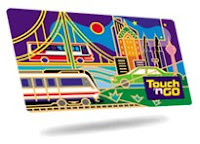
In Malaysia, the most popular prepaid cash card is Touch n’Go card. Touch 'n Go can be used in entire highways stretches in Malaysia with the familiar TnG & SmartTAG sign marked on the road. Besides that, Touch n’Go card can be use as an integrated ticket on the Public transportation system in KL, only 3 companies have implemented this into their collection system which are Rapid KL (rail and bus) KTM Komuter and KL Monorail. Touch n’Go card can also use in paying admission fees of theme parks such as Sunway Resort. It is not only for toll fare and theme park but also parking services and cashless payment at retail outlets. It is expanding its business to retail purchase by starting with fast food industry.

In Singapore, The EZ-Link card is a used for the payment of public transportation fares with limited use in the small payments retail sector. For paying transportation fees in the city-state 's Mass Rapid Transit (MRT), Light Rail Transit (LRT) and public bus service. The card also serves as a supplementary identification and concession card for student in nationally recognised educational institutes, full-time national service personnel serving in the Singapore Armed Forces, Singapore Civil Defence Force and Singapore Police Force or senior citizens who are over sixty years old.

The CEPAS compliant Adult EZ-Link card, introduced in 2009.

The defaced EZ-Link card, revealing the internal circuits.

Octopus reader at an MTR tickets gate

In Hong Kong, The Octopus card is popular used for payment of Mass Transit Railway (MTR). The Octopus card system was the first contactless smart card system in the world and has since grown into a widely used payment system for virtually all public transport in Hong Kong. The Octopus card is a rechargeable contactless stored value smart card used to transfer electronic payments in online or offline systems. The Octopus card is also used for payment at convenience stores, supermarkets, fast-food restaurants, on-street parking meters, car parks, and other point-of-sale applications such as service stations and vending machines.


The rainbow-coloured Personalised card is available on registration. The name and, if opted, a photo of the holder are imprinted on the cards. They can function automatically as a Child, Adult, or Elder card by recognizing the cardholder's age stored on the card, hence accounting for different concessionary fares.

The security of prepaid cash card is reliable such as personal identification numbers (PINs) protect consumers against theft and fraud therefore the use of Prepaid Cash Cards is popularly acceptable by the most of people or even foreign countries.

Credit Card Debts: Causes and Prevention

Credit card is a part of a system of payments named after the small plastic card issued to users of the system. It is card entitling its holder to buy goods and services based on the holder’s promise to pay for these goods and services. The issuer of the card grants a line of credit to the consumer from which the user can borrow money for payment to a merchant or as a cash advance to the consumer.

A credit card is different from a charge card, where a charge card requires the balance to be paid in full each month. On the other hand, credit card allows consumers to revolve their balance at the cost of having interest charged. Most banks and credit unions issued credit cards to consumers such as MasterCard, Visa and etc.

Nowadays, credit card debts are major causes of bankruptcies each year. The standards of living in a globalization world kept on increasing but our salaries and purchasing power remain the same. These problems cause consumers to turn to banks and credit unions to subscribe credit card. Therefore, these credit cards have planted debts in consumers’ pockets. These happened because many people never realized of its consequences from financial and non-financial perspectives when they get a new credit card. The following are some of the causes and prevention of using credit card.

Causes
One of the following causes of credit card debt might mirror our financial situation:

Excessive Medical expenses
Credit card will probably be the main source of funds to pay off medical expenses if health insurance is not adequate to cover the medical bills. In United States, almost everyone pays their medical expenses by credit card.

Gambling
As we all know, gambling has become part of our life as entertainment and fun. But when one is addicted to it, it’s hard to stop. Its fine if we spend our own pocket money but if we borrow money through credit card for gambling will lead to financial disaster. It’s like saying ‘digging your own grave’.

Poor Money Management
Poor money management also led to credit card debts by consumers who did not control their spending properly. Most people spend their money purchasing items that are valueless to them in near future. Debtors are unaware to conduct a proper monthly spending plan and did not bother to keep track of their monthly bills. These led us to the mountain of credit card debts.

Unemployment
When economic downturn, many people are unemployed and jobless. Households were forced to used credit card for their groceries, utilities and other expenses in order to maintain their current lifestyle when the main breadwinner of the household had lost his job and unable to find new job during short periods. This may lead to a rise in debt when expenses are not cut down in line with the reduction in income.

Prevention:
1. Avoid adding up more credit card debts
When you have a big sum of debts to pay, try not to apply any new credit card as it will increase your debts not reducing it. So, whenever there is a credit card showroom or salesperson approaches you, avoid it and try to say to no.

2. Making a budget
Try to have a habit of keeping every single receipt and bills to form a budget for all your expenses. Spend wisely according to your budget plan; hence, it will prevent you from overspending.

3. Self-control and discipline
One of the best practices is to have a strong self-control and discipline to avoid overspending. Consumers (users) can prevent these from happening by setting a list on what to buy and not to buy. Consumers should also follow their planned budget and limit the usage of credit cards.

Below is a video clip on how to overcome your debts:


In the nutshell, credit cards do come in handy when in need but when it comes down to settling the payments it’s a headache to users. Credit cards are meant for emergency only. So used it wisely or unavoidable causes will fall upon you and never try to run away from paying your debts.

Mobile payment systems in Malaysia: Its potentials and consumer's adoption strategies

M-payment (mobile payment) is a point-of-sale or transaction of money payment made through a mobile device, such as a cellular telephone, a Smartphone, or a personal digital assistant (PDA) and other devices.

Mobile payment systems can be used for purchasing music’s, ringtones, wallpaper and games (there are many of these type of service or product offered in Malaysia’s newspaper). Most Malaysian buys these ringtones and games via mobile payment, either via GPRS/WAP or SMS (premium SMS based transactional payments).

There are few types of mobile transaction can be made:

1. Premium SMS transaction
Premium SMS transactions are the most common in Malaysia, most mobile users download their wallpaper, music, ringtones and mobile games by buying them through SMS payment. SMS payment requires you to send a certain code to certain number to confirm you want to buy those products.

2. WAP (mobile web)
WAP payment is similar to SMS, you are required to select product you want from the web and a confirmation message will be displayed to you with the details of product before u can confirm it.

3. Mobile payment providers
Mobile payment provider is different they uses SMS and Web, it helps to extend the ability of mobile payment. There are few mobile payment providers in Malaysia, such as Mobile Money (http://mobile-money.com.my/index.html) who provides variety of products and services. By registering an account with mobile payment provider, you can top up your credit to them and use it to purchase products or services offered by them.

Mobile Money offers products such as food and beverages, car accessories and personal care products which can be viewed from their website. They also offer services such as buying or paying broadband bills (Steamy) by SMS the code of product to them.

Potentials:

Market still at developing stage, many new users enter into this market and enjoy the services provided by the Maxis, Digi, Celcom, U Mobile and others smaller service provider.

Many mobile phone users, the market is large as mobile phones become a need to all of us in nowadays. Even a primary school student also have a hand phone on his or her hand and this is the market that should grabbed by the service provider.

Low competition, the competition level still is low as the most people still blur on how to operate a firm that running mobile payments systems. This due to this market still in growth stage and more service provider needed to become a mature market.

Consumer’s Adoption Strategies:
Educate consumers about mobile payments, how to use and introduce its functions (e.g. bill payment, mobile purchase).

Enhance security and confidence to mobile users .

Collaborate with more banks and companies to widen the ability to pay via mobile at the same time it helps to increased customer’s satisfaction and confidence.

Maintain customer’s loyalty.

Electronic Currency


Electronic currency (also known as e-money, electronic cash, electronic money, digital money, digital cash or digital currency) refers to money or scrip which is exchanged only electronically. Typically, this involves use of computer networks, the internet and digital stored value systems.

E-micro payment system is small online payment company. There are five types of them, such as:

a) Firstgate's click and buy
Firstgate works with about 3,000 providers of articles, information, games, and other content for 2.5 million customers, mostly in Europe. For security, Firstgate uses passwords and secure sockets layer (SSL) encryption, similarly records the IP addresses of buyers’ machines for reference in case problems occur. The company charges content providers an up-front fee—which varies based on the complexity of the project—for set-up, integration, and consulting. It tailors its systems with business rules for each participating merchant. The company bills buyers’ credit cards, debit cards, or phone accounts, once they have accrued a few dollars in charges. North American customers can buy material via a charge to their bank accounts. It aggregates consumer micropurchases across merchants to enable a single processing of multiple transactions. This reduces processing costs, per-purchase credit card fees, and administration. Firstgate then remits money to merchants via checks or bank transfers.

Firstgate's Click & Buy now accepted in European iTunes Music Stores(C)1994-2005 M2 Communications Ltd. Apple has announced the launch of Firstgate's Click & Buy payment option for European iTunes Music Store customers, offering the ability to purchase music, audio books and gift certificates via debit card, direct debits, invoice or bank transfer. In addition, the company has launched its affiliate programme across Europe.


b) Payloadz

PayLoadz works with about 1,000 merchants and generates about $3 million per year in revenue. Rather than having prepaid accounts with PayLoadz, users pay sellers directly through PayPal, which also verifies that the buyers have enough money in their accounts to make the purchase. Merchants pay PayLoadz a flat monthly fee based on their sales levels, rather than a percentage of each transaction.

PayLoadz delivers files via a secure server to the customer using PayPal’s Instant Payment Notification system, which lets vendors integrate PayPal with their back-end operations. Buyers never see a PayLoadz interface. The payloadz system consists of an application server that hosts the website and handles transaction processing, a file storage, delivery server and a database server. Separating the componets into servers tuned for specific roles improves performance and reliability.


c) Paystone technologies
Customers in North America, Australia, New Zealand and parts of Europe can access Web content after setting up prepaid Paystone accounts by mailing funds directly to the company using their bank’s bill payment service or by depositing cash at any Bank of America branch. Merchants that sell content via Paystone create links to the e-micro-payment system. Customers follow the links, enter their Paystone password, and are redirected back to the content they want to purchase. For security, Paystone uses 128-bit SSL encryption.


d) Peppercoin
Massachusetts Institute of Technology cryptography expert Ron Rivest and fellow MIT computer scientist Silvio Micali founded Peppercoin. Buyers at participating Web sites who want to use Peppercoin see the e-micropayment technology’s interface, which looks like a common credit card interface, noted Bob Nix, the company’s vice president of engineering. The application’s new version, Peppercoin 2.0, doesnot require pre-enrollment or predeposit of funds. Consumers just enter their credit or debit card information with the merchant online as usual, and Peppercoin processes the transaction. The application uses a universal aggregation technique to efficiently process many small interactions between multiple consumers and merchants as a few large transactions.


The company uses RSA BSAFE software to provide encryption and digital signing capabilities for the security of a buyer’s information and the transaction’s integrity. Digital signatures can authenticate a message’s sender’s identity and verify that no one has altered the original content. To reduce overhead on small transactions, Peppercoin uses an online self-service customer-service module.


e) Digicash
DigiCash Inc. was a pioneering electronic currency corporation founded by David Chaum in 1990. DigiCash transactions were unique in that they were anonymous due to a number cryptographic protocols developed by its founder. DigiCash declared bankruptcy in 1998, and subsequently sold its assets to eCash Technologies, another digital currency company, which was acquired by InfoSpace on Feb. 19, 2002.

Digicash’s mission is to create a new personalized dimension to the shopping experience. We transform online incentives into powerful new tools, establishing a strong, high-value connection between consumers and ecommerce companies. The Digicash Wallet, our first product, gives merchants a revolutionary new approach for initiating real-time, value-creating coupons and promotions to increase sales, margins, and customer loyalty.Consumers are embracing the Digicash Wallet because it’s fun, easy, convenient and personalized to their shopping needs. Capture the benefit of rising coupon usage without sacrificing profits!

Hope that online payment makes our lives easier and more fun!

The Applicaiton of 3rd Party Certification Program In Malaysia

In a virtual world nowadays, people are having doubt on sending and receiving sensitive information. Unsecured websites or web pages has indeed creating worries of a large numbers of Internet users when they were required to update their profiles, online payments and etc. Thus, Secured Sockets Layer (SSL) came out with the best solutions that gain all web users’ trust by getting an SSL Certificate for their website. SSL is a technology developed by Netscape and being adopted by all vendors who are producing products that were related to Web software for the exchange between client and servers.
MSC Trustgate.com Sdn Bhd is the first to be the third party certification program in Malaysia. MSC Trustgate.com Sdn Bhd is a licensed Certification Authority (CA) operating within the Multimedia Super Corridor. Certification Authority is the body given the license to operate as a trusted third party in the issuance of digital certificates. MSC Trustgate.com Sdn Bhd was incorporated in 1999 to meet the growing need for secure open network communications and become the catalyst for the growth of e-commerce, both locally and across the ASEAN region.

They also offered complete security solutions and leading trust services that were needed by individuals, enterprises, government and e-commerce service providers using digital certificates, digital signatures, encryption and decryption. Trustgate is licensed under the Digital Signature Act 1997 (DSA), a Malaysia law that sets a global precedent for the mandate of a CA. The products and services of Trustgate are SSL Certificate, Managed PKI, Personal ID, MyTRUST, MyKAD ID, SSL VPN, Managed Security Services, VeriSign Certified Training and Application Development. The vision of Trustgate is to enable organizations to conduct their business securely over the Internet, as much as what they have been enjoying in the physical world.
VeriSign is the leading Secure Sockets Layer (SSL) Certificate Authority under Trust.com which also enabling the security of e-commerce, communications, and interactions for Websites, Intranets, and extranets. It provides security solutions to protect an organization’s consumers, brand, Website and network.

VeriSign will review the credentials and check through all the background of organization to ensure that the claim of organization before issuing any server certificate. The browser will verify its business purpose through ID automatically when browser connects to a legitimate site with VeriSign SSL Certificates. After that, information received by Web visitor is identical to encryption between browser and server and no modification is taken place.

Digital certificate usually attached to an e-mail message or an embedded program in a web page that verifies user or websites who they claim to be. The common functions of a digital certificate are user authentication, encryption and digital signatures. User authentication provides other security than using username and password. Its session management is stronger. Encryption can make the data transmission secured by using the information encrypted. The intended recipient of the data is the only person to receive the message. Digital signatures are like the hand signature in the digital world. It can even ensure the integrity of the data.

By using the digital certificate, users will be able to make transaction on the Internet without fear of having their personal data being stolen, information contaminated by third parties and transacting party denying any commercial commitment with the users. Hence, the digital certificates can assist the development of greater Internet based activities.

With the increasing of phishing on Internet, all web users want to make sure that whether they have a good business deal with a trusted party. All the security needed because they are afraid that their personal information for instance ID number, passwords, credit card numbers and etc. will be stolen by those illegal companies that does not exist.

In the nutshell, certification from third party is needed to ensure their information travelled over the Internet that reached the intended recipient and safe. Most of the banks in Malaysia have their proof of security by showing their verified certificate on their e-banking website in order to avoid phishing.

Last but not least, VeriSign is one of the trusted brands on Internet for furthering enhances operation of e-commerce. These were because it gives confidence to end users in communicating online and online business transactions. In return, the company will receive accurate information that customers might not refuse later. They also provide additional protection against the misuse and expiring certificates.

Lastly, by applying third party certification there will be more secured for online shoppers to purchase their products or items without being worried anymore. They can now shop freely and safely as well.

Phishing : Examples And Its Prevention Methods

  1. What is phishing?

    The action of sending an e-mail to a user falsely claiming to be an established legitimate enterprise in an attempt to scam the user into surrendering private information that will be used for identity theft. The e-mail directs the user to visit a web site where they are asked to update personal information, such as passwords and credit card, social security, and bank account numbers, that the legitimate organization already has. The Web site, however, is bogus and set up only to steal the user’s information.

Example of phishing
For example, in year 2003 there is a proliferation of a phishing scam in which users received e-mails supposedly from eBay claiming that the user’s account was about to be suspended unless he clicked on the provided link and updated the credit card information that the genuine eBay already had. Because it is relatively simple to make a Web site look like a legitimate organizations site by mimicking the HTML code, the scam counted on people being tricked into thinking they were actually being contacted by eBay and were subsequently going to eBay’s site to update their account information. By spamming large groups of people, the “phisher” counted on the e-mail being read by a percentage of people who actually had listed credit card numbers with eBay legitimately.

Prevention method:

1.Regarding emails: DO NOT trust emails urgently requesting personal financial information !

2.Be sure not to call any number or use any link in the suspected email as this may put you in the hands of those responsible for the phishing attack.

3.Be suspicious of impersonal emails.

4.NEVER fill out forms in email messages that ask for personal financial information


5. Be suspicious of email links. Never trust it! There are ways to "spoof it" !

6. Always ensure that you're using a secure website when submitting credit card or other sensitive information via your Web browser

7. Regularly log into your online accounts

8. Ensure that your browser is up to date and security patches applied at http://www.microsoft.com/security/

9. Help stop phisching by reporting "phishing attacks" or “spoofed” e-mails to the following groups:


(i) Forward the email to reportphishing@antiphishing.com
(ii) Forward the email to the "abuse" email address at the company that is being spoofed (e.g. "spoof@ebay.com") when forwarding spoofed messages, always include the entire original email with its original header information intact.

The Threat of Online Security : How SAFE is our Data ?


Online security threats are one of the biggest challenges on the Internet. The problem is that every day there are new viruses and security threats that are launched all over the Internet, which means you need programs that can be updated continuously and don't just target one specific type of problem.

The best ways you can do if you get on the Internet at all is to use security software and hardware such as firewalls and authentication servers, as this is the most effective way to protect your computer and your personal information. It's best if you choose hardware and software that will update itself each time you are on the Internet, without you having to remember. It's also very important that you choose your passwords carefully, so that those that might want access to your information won't be able to guess as to what password you might use.

There are some of the main online security threats and the cautions of each :

1. Web servers and services ~ Default HTTP (Web) servers have had several vulnerabilities, and numerous patches have been issued over the past several years.
Cautions : Make sure all your patches are up to date, and do not use default configurations or default demonstration applications. These vulnerabilities may lead to denial-of-service attacks and other types of threats.


2. Windows authentication ~ Most Windows systems use passwords, but passwords can be easily guessed or stolen.
Cautions : Creating stronger, more difficult to guess passwords, not using default passwords, and following a recommended passwords policy will prevent password attacks.


3. Web browsers ~ Your window to the Internet, a Web browser contains many vulnerabilities. Common exploits may include disclosure of "cookies" with personal information, the execution of rogue code that could compromise a system, and exposure of locally-stored files.
Cautions : Configuring the browser's security settings for a setting higher than the default value will prevent most Web browser attacks.


4. Mail client ~ Attackers can use the mail client on a computer to spread worms or viruses, by including them as attachments in emails.
Cautions : Configuring the main servers appropriately, and blocking attachments such as .exe or .vbs files, will prevent most mail client attacks.


5. Instant messaging ~ Many corporations also block employees from using instant messaging, not only because of the technical threats but also because of the possibility of lost productivity.
Cautions : Configuring IM properly, applying all the latest patches, and taking control over any file transfers that occur over IM will prevent most attacks.

How to safeguard our personal and financial info?

How can we avoid "thefts" from the website? There are several ways to protect our personal and financial info, such as:

1) Password Protection
Strong passwords are hard for other members to guess with a combination of numbers and letters if possible. Do not write it down and carry in the wallet or briefcase.


2) Install and update antispyware and antivirus
The antivirus programs include Symantec, Norton Antivirus and AVG antivirus. This viruses may steal or modify the data on your own computer. Keep this programs up-to-date is necessary to have well protection.

3) Install a firewall
Most new computers come with firewall integrated into their operation systems in order to allow "good" people to access.


4) Regularly scan your computer for spyware
Spyware in the software programs may affect the performance of your computer and give attackers access to your data. Use a legitimate anti spyware to scan and remove any infected files.


5) Avoid access financial information in public
Cyber cafe, wireless access place are the venue that have to prevent from logging to check bank balance. Remember to close the browser window or log out before leaving as to prevent other users read the personal information.


6) Keep your credit cards carefully
Make sure waiter or waitress handle the card to you when shopping or eating out. Then take the card as well as the receipt and do not throw it away in a public place. Keep the card that you actually use only.

7) Avoid clicking on pop up advertisement and download information from unknown websites.


Wish all of us have a safe and secure journey when using internet!!!!